Skip to content
  • Services
    • Fintech Strategy
    • Fintech Regulation
    • Fintech Sourcing
    • Strategy Expert advice on markets, products and funding
    • Regulation Secure licenses and meet compliance obligations
    • Solutions Source reliable financial and technology solutions
  • Sectors
    • Payments
    • eCommerce
    • FinTechs
    • Crypto Assets
    • Lenders
    • Banks
    • Private Equity
    • Governments
    • Payments Launch fast, grow volumes and reduce financial crime
    • eCommerce Secure processing, increase conversions and reduce cost
    • FinTechs Integrated commercial, technology, and funding plans
    • Crypto Assets Capture financial, technology and regulatory opportunities
    • Lenders Grow lending, reduce NPLs and automate processes
    • Banks Offer personalised CX, improve efficiency and agility
    • Private Equity Access FinTech deal flow and maximise returns
    • Governments Craft policy to generate investment and jobs
  • Resources
    • Case Studies
    • Blog
    • FinTech Marketplace
    • Case Studies 20-year track record with world-class clients
    • Blog Stay ahead of the market with data and insights
    • FinTech Marketplace Understand financial and technology solutions
  • About
    • Management
    • Why Us
    • Contact
    • Management Meet our financial services experts
    • Why Us Discover our attributes and values
    • Contact Request a call today

Get started

Give us a call or fill in the form below and we will contact you. We endeavor to answer all inquiries within 24 hours on business days.

Edit Content

0 / 180
Capital Markets

What is an Asset Class?

November 25, 2025 neilmathieson No comments yet
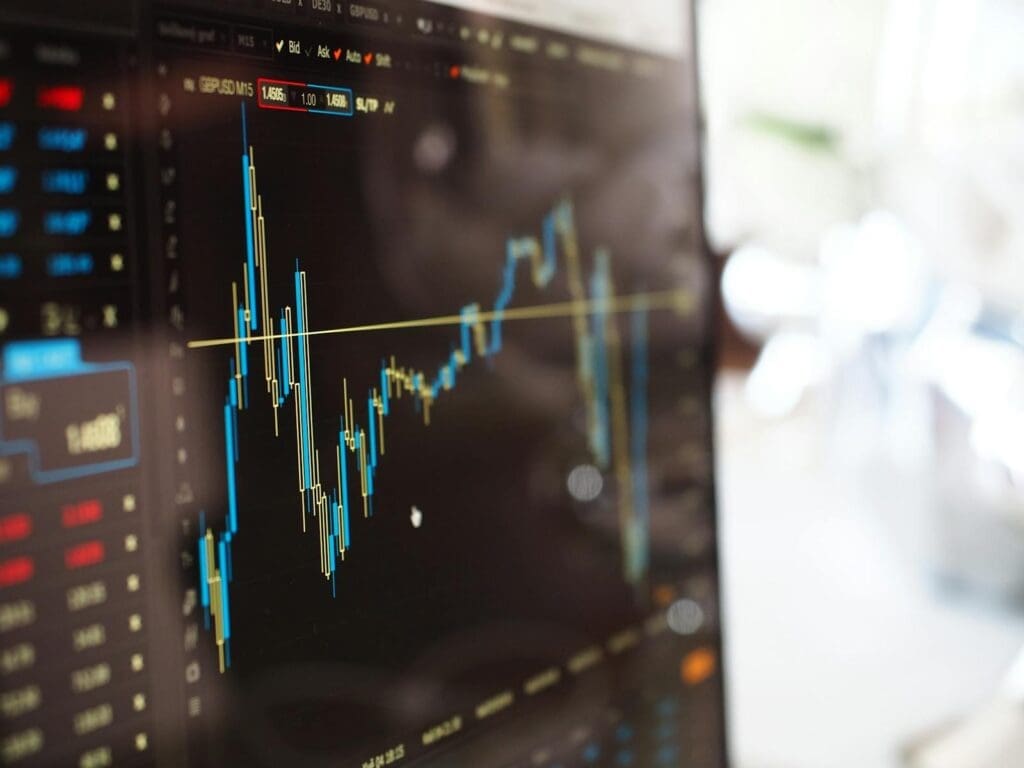
Detailed financial graph on a monitor illustrating performance of the equity asset class
  • Asset classes are groupings of investments with similar characteristics.
  • Each asset class has its own risk and reward dynamic; investors often diversify these.
  • Common asset classes include equities, fixed income, FX, and alternatives.
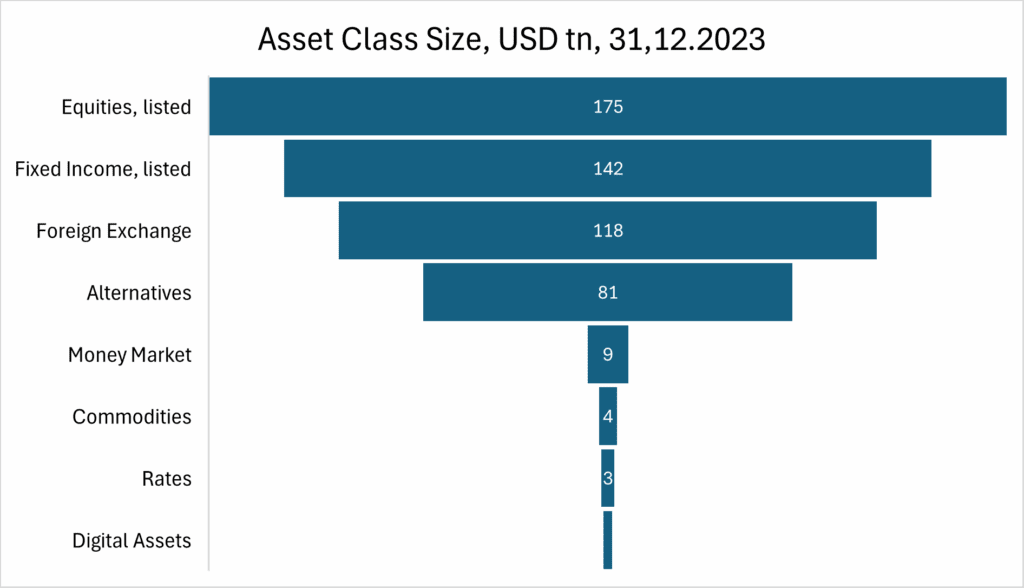
  • As of 31.12.2023, equities were the largest asset class in the world at USD 175tn notional value.
  • Valuations and liquidity vary based on asset and market conditions; historic assumptions may not be reliable.
 

What is an Asset Class?

Asset classes are groupings of investments with similar characteristics in terms of structure, risk, and reward.

By grouping investments, it is easier to understand their absolute and relative returns.

There may be no correlation between the asset classes; however, investors may rotate between them based on returns, market conditions, or investment goals. Others may diversify across the asset classes based on weightings.


What are the main Asset Classes?

The most common asset classes are cash, fixed income, equities, FX, commodities, alternatives, and digital assets.

It is common to list asset classes from lowest to highest risk.

In some asset classes, the investment will be listed on a public exchange or market, while in others it is a private or over the counter (OTC) transaction.


What size are the main Asset Classes?

Valuations on public markets are dynamic, while in private markets, they are opaque and often subjective. As at 31.12.2023 the largest asset classes by notional outstanding were:

Source: LSEG, MSCI


Equities Asset Class

Description: Shares in a company that is publicly listed.

Typology: Ordinary, preference, class, non-voting, etc.

Liquidity: High, subject to how much of the company is floated, volumes, market, etc.

Returns: Appreciation of value and dividend payments (cash or shares).

Risk: Company performance and market risk.


Fixed Income Asset Class

Description: Bonds of a corporate or financial institution that are publicly listed.

Typology: Fixed, floating, zero-coupon, convertible, callable, put, etc.

Liquidity: High, subject to the size of issue, volumes, market, etc.

Returns: Appreciation of value and fixed payment of capital and interest. Equity if convertible.

Risk: Counterparty credit and market risk. Typically rated, but care is required on creditor ranking.


Money Market Asset Class

Description: Accounts and fixed income instruments with very short-term maturities.

Typology: MM account, commercial paper (corporate), treasury bills (government).

Liquidity: High, if traded, it depends on the size of the issue, volumes, market, etc.

Returns: Fixed payment of capital and interest.

Risk: Counterparty credit.


Foreign Exchange Asset Class

Description: Trading of foreign currencies, of which 99% happens over the counter (OTC).

Typology: Spot, forward, option, future.

Liquidity: Depends on currency pairs.

Returns: Appreciation of value.

Risk: Counterparty credit, settlement, and market risk. Higher risks may be collateralised.


Commodities Asset Class

Description: Trading of commodities on a listed exchange or traded over the counter (OTC).

Typology: Energy, metals (base, precious, industrial), agricultural, Livestock, spot, future, option.

Liquidity: Depends on the commodity and market.

Returns: Appreciation of value.

Risk: Counterparty credit, settlement, and market risk. Higher risks may be collateralised.  


Alternatives Asset Class

Description: Non-standard asset types, traded in private markets, and often held over a long term.

Typology: Private Equity, Private Debt, Real Estate, Collectibles, Infrastructure.

Liquidity: Low or very low, depending on matching buyer and seller.

Returns: Private Debt is a fixed payment of capital and interest. Real Estate provides an income stream (yield). Others are appreciation of value, which in some cases can be high.

Risk: Complex and dependent on each situation, but typically liquidity, counterparty credit, and market risk. In some cases, alternatives also have little transparency or regulation.


Rates Asset Class

Description: Bonds of a government that are publicly listed or traded over the counter (OTC).

Typology: Sovereign, inflation-linked, IR swap, IR option, repo, etc.

Liquidity: High, depends on the size of the issue, volumes, market, etc.  

Returns: Appreciation of value if bond, fixed payment of capital and interest.

Risk: Counterparty credit and market risk. Typically rated, but care is required on creditor ranking.


Digital Assets

Description: digital assets that are publicly listed.

Typology: Cryptocurrency, stablecoins, NFTs.

Liquidity: Variable, depends on volume, market, etc.

Returns: Appreciation of value.

Risk: Market risk and fraud risk. In some cases, highly volatile, with little transparency or regulation.


Cash and Cash Equivalents

Description: cash held in a bank, e-money, or investment account.

Typology: Cash, deposit, certificate of deposit.

Liquidity: Very high, although some deposits are subject to a minimum term.

Returns: Low, depends on prevailing interest rates.

Risk: Counterparty credit risk, may be subject to a guarantee or insurance.


How we Help

We provide strategy consulting, regulatory support, financial and technology solutions to financial institutions, fintechs, corporates, investors and governments. Contact us for a free consultation. It pays to be Sure.


  • Banks
  • Governments
  • Private Equity
neilmathieson

Post navigation

Previous
Next

Leave a Reply Cancel reply

Your email address will not be published. Required fields are marked *

Search

Categories

  • Capital Markets (1)
  • Financial Technology (6)

Recent posts

  • Image depicting what is payment tokenization on a payment journey
    What is Payment Tokenization?
  • Stack of various branded credit cards focusing on gold card showing credit card payment journey
    The credit card payment journey
  • Detailed financial graph on a monitor illustrating performance of the equity asset class
    What is an Asset Class?

Tags

Banks eCommerce Fintechs Governments Payments Private Equity

Continue reading

Image depicting what is payment tokenization on a payment journey
Financial Technology

What is Payment Tokenization?

December 3, 2025 neilmathieson No comments yet

Payment tokenization explained Tokenization is a technique that replaces sensitive card data, such as name and primary account number (PAN), with a unique random code. Tokens are ideal for storing sensitive data against financial crime such as unauthorised access (internal fraud) and data breaches (external hack). Tokens increase sales by reducing the need to re-key data, […]

Black business payment card with chip
Financial Technology

What are interchange fees and why do they matter?

September 24, 2025 neilmathieson No comments yet

What are interchange fees? Interchange fees are the costs applied to a merchant when a customer makes a credit or debit card payment. The fee is collected by the payment acquirer and then apportioned to the card issuer, card network and acquirer. Example of interchange fees? For an EUR 100 card payment the unit economics […]

Person programming a laptop
Financial Technology

Trends in global Financial Crime 2024

September 23, 2025 neilmathieson No comments yet

How big is global money laundering? According to NASDAQ, USD 3.1tn in illicit flows and money laundering activity flowed through the global financial system in 2023. The most prevalent money laundering crimes were USD 783bn in drug trafficking, USD 347bn in human trafficking and USD 12bn in terrorist financing. Money laundering estimates are the money flowing […]

Want to receive news and updates?


    Profit at the intersect of finance and technology.

    Services
    • Strategy
    • Regulation
    • Solutions
    Sectors
    • Payments
    • Ecommerce
    • FinTechs
    • Crypto Assets
    • Lenders
    • Banks
    • Private Equity
    • Governments
    Resources
    • Case Studies
    • Blog
    • FinTech Marketplace
    About
    • Management
    • Why Us
    • Vacancies
    • Contact

    © 2005-2025. All Rights Reserved.

    • Terms & Conditions
    • Privacy Policy